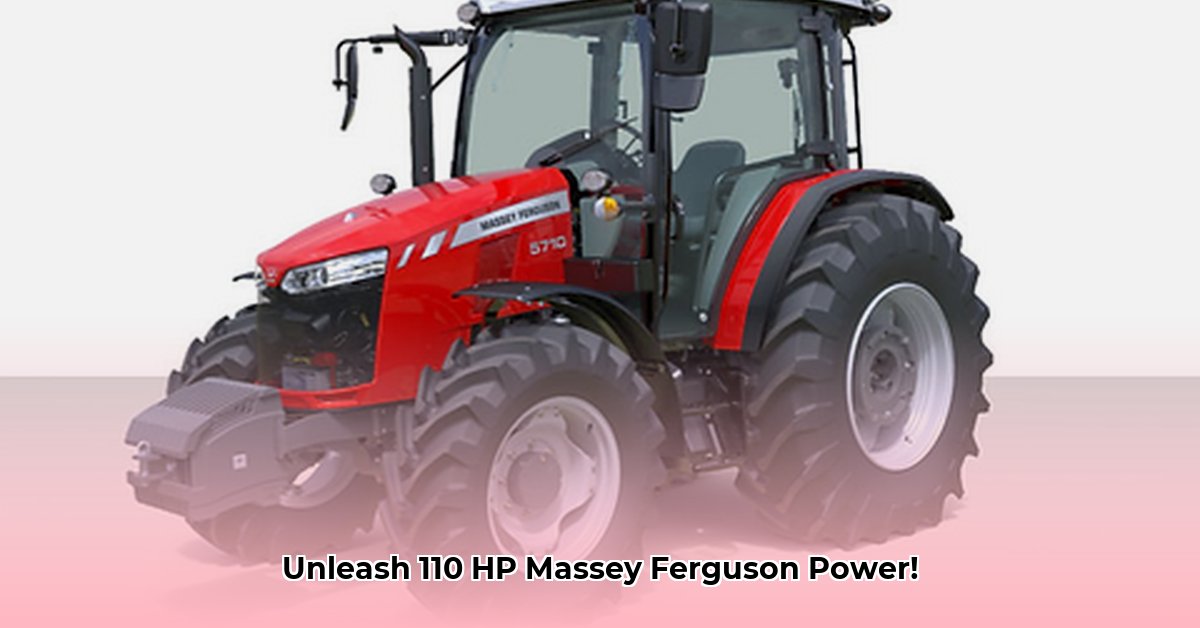
110 hp Massey Ferguson Tractor: A Deep Dive into Power and Efficiency
Considering a 110 horsepower Massey Ferguson tractor? This in-depth look examines its capabilities, fuel efficiency, and overall suitability for boosting your farm's productivity. We'll analyze its strengths and weaknesses, comparing it to competitors to help you make an informed decision. Choosing the right tractor is a significant investment – let's ensure you choose wisely. For another perspective, check out this detailed analysis of a similar model: Ford 3600 specs.
The Massey Ferguson MF 5700 Series: Performance and Sustainability Combined
The 110 hp Massey Ferguson, often found within the MF 5700 series, boasts a robust 4.4-liter AGCO Power engine. This engine is designed for demanding agricultural tasks, offering reliable power while meeting stringent emission standards. Isn't it remarkable how modern technology allows for both power and environmental responsibility? This translates to lower running costs and a reduced environmental impact.
The 12x12 gearbox provides exceptional versatility, adapting to a wide range of applications, from plowing to operating attachments. The optional Power Control lever enhances implement management, reducing operator fatigue and improving precision. The electronic hitch control (ELC) further refines accuracy, minimizing wear and tear on both equipment and tractor. This combination of features makes the MF 5700 a remarkably adaptable machine.
Fuel Efficiency and Environmental Impact: A Balanced Approach
Fuel efficiency is paramount in modern agriculture. The MF 5700 is engineered for optimal fuel consumption, resulting in significant cost savings. But the benefits extend beyond financial gains; reduced fuel consumption directly contributes to a smaller carbon footprint, aligning with the growing emphasis on sustainable farming practices. Isn’t optimizing both profitability and environmental responsibility a win-win for farmers?
Moreover, the maintenance-free Selective Catalytic Reduction (SCR) system minimizes downtime, maximizing operational hours. This translates to greater productivity and higher profit margins. But how does this compare to competitors? Let's examine that question next.
Comparative Analysis: Massey Ferguson vs. the Competition
Before committing, a thorough comparison with similar tractors from John Deere and Case IH is essential. While this Massey Ferguson model offers compelling advantages, a comprehensive analysis requires comparing fuel efficiency, emission levels, and overall performance across different conditions. Independent reviews and testing data will provide a truly objective evaluation. What key factors should you prioritize in this comparison? Let's look at three crucial aspects.
Three Pivotal Points for Tractor Selection:
- Fuel Efficiency: Focus on liters per acre, not just liters per hour, for a true measure of efficiency.
- Versatility: Consider the range of tasks the tractor can perform efficiently without requiring extensive additional equipment.
- Total Cost of Ownership (TCO): Include initial price, maintenance, repairs, and potential resale value in your calculations.
Making the Right Choice: Questions to Ask Before You Buy
Investing in a tractor is a substantial commitment. Consider these crucial factors:
Budget: Determine a realistic budget, encompassing not only the purchase price but also long-term operational costs—fuel, maintenance, repairs, and insurance—over at least five years. Accurate budgeting is critical for long-term financial health.
Specific Farm Needs: Does the tractor's horsepower, features, and capabilities precisely match your farm's requirements? Will it handle your most demanding tasks with ease, or will you constantly be pushing its limits? Matching tractor capability to the demands of your farm is paramount.
Long-Term Cost of Ownership: Calculate TCO over the tractor’s lifespan. This holistic approach considers all costs, from initial investment to eventual resale value, providing a clear view of the overall financial implications.
How to Effectively Compare Fuel Efficiency Across Tractor Brands
Fuel costs represent a substantial expense for farmers. This section provides a framework for comparing the fuel efficiency of the Massey Ferguson MF 5700 and its competitors.
Factors Influencing Tractor Fuel Consumption
Several factors significantly influence a tractor's fuel consumption:
Engine Technology: Modern engines employing features like electronic fuel injection and EGR systems generally offer better fuel economy than older models.
Transmission Type: Efficient transmissions minimize power loss. Consider comparing manual versus automatic transmissions.
Implement Selection: Properly matching implements to the tractor's power output is critical to avoiding unnecessary fuel consumption.
Operating Techniques: Skilled operation can significantly impact fuel consumption. Aggressive driving wastes fuel; precision driving saves money.
Terrain: Steep inclines and uneven terrain inherently increase fuel use. This is an uncontrollable factor that must be factored into your assessments.
A Practical Approach to Comparing Fuel Efficiency
Direct comparisons are challenging due to variations in testing methodologies. However, a multi-faceted strategy can yield a reasonable assessment:
Manufacturer Specifications: Begin by comparing fuel consumption figures provided by manufacturers. These figures, though often idealized, provide a baseline for comparison.
Online Resources and Reviews: Utilize online forums and review sites to gather real-world fuel consumption feedback from MF 5700 owners and users of competing models.
Farmer Network: Tap into your network of fellow farmers. Inquire about their experiences with different tractor brands, focusing on their observations regarding fuel efficiency.
Remember, while perfect precision is difficult to achieve, this multifaceted approach offers a much more reliable estimate than relying solely on manufacturer data.
Beyond Fuel: The Broader Picture of Total Cost of Ownership
While fuel efficiency is essential, remember to consider TCO. This includes:
- Initial purchase price
- Maintenance costs
- Repair costs
- Resale value
A seemingly more fuel-efficient tractor might become more expensive overall due to higher maintenance or lower resale value. A well-rounded assessment necessitates considering all these factors.